Injection Molding Services
Precision Injection Molding for Mass Production with Tight Tolerances
Precision Injection Molding
Our advanced injection molding services provide high-volume production solutions for complex plastic components with exceptional precision and repeatability. With state-of-the-art equipment and experienced engineers, we deliver consistent quality at competitive costs.
We specialize in both thermoplastic and thermoset materials, offering comprehensive solutions from design optimization and mold development to final production and secondary operations.
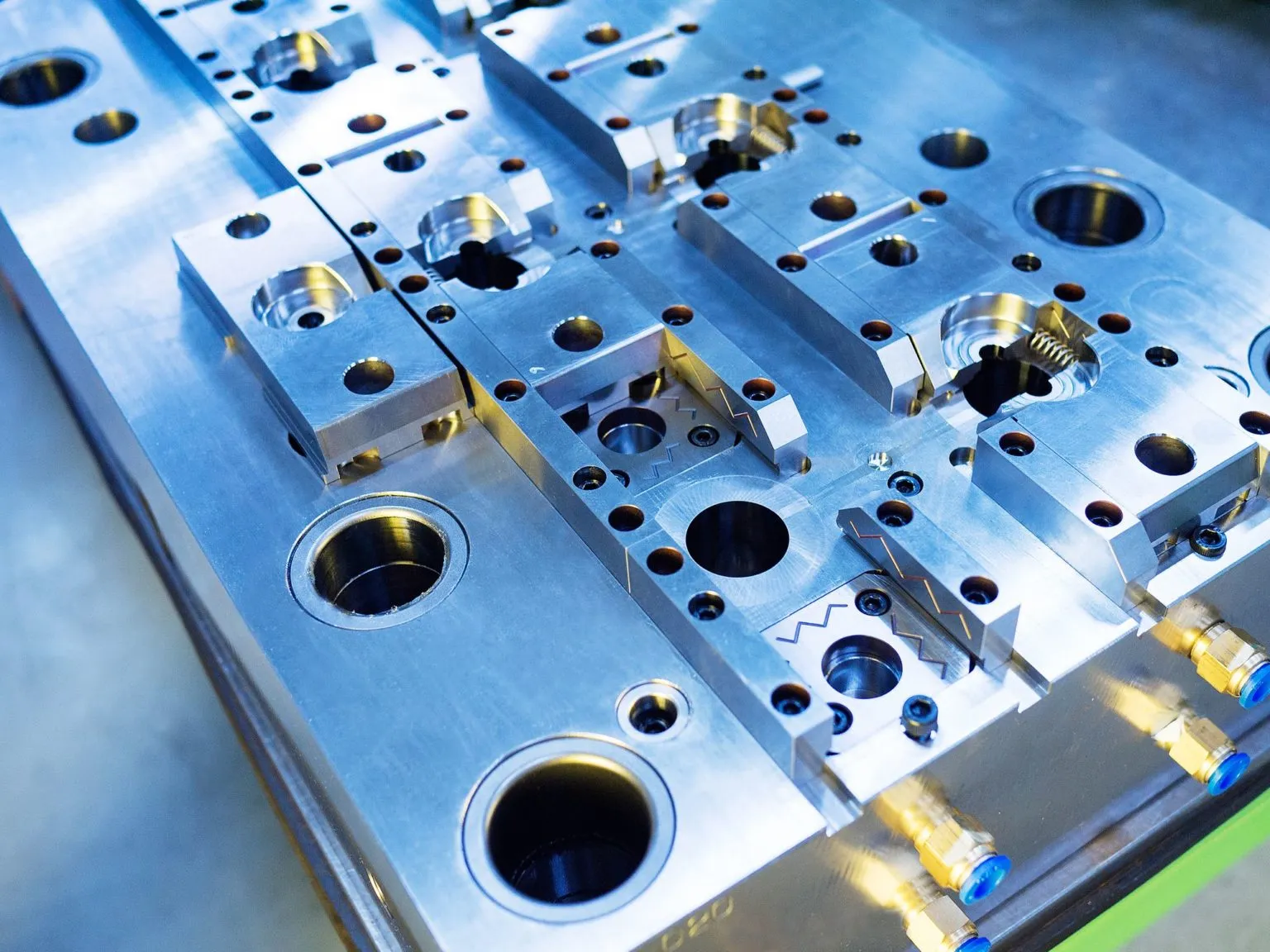
Injection Molding Process
Mold Design
CAD design and flow analysis with gate optimization and cooling channel layout
Mold Manufacturing
Precision CNC machining of mold components with P20/H13 hardened steel
Production Setup
Machine calibration, material drying, and process parameter optimization
Quality Control
In-process monitoring, dimensional inspection, and statistical process control
Technical Capabilities
Equipment Specifications
Material Compatibility
Thermoplastics
- PP, PE, PS
- ABS, PC, PMMA
- POM, PA66, PBT
- PEEK, PPS, LCP
Special Materials
- Medical Grades
- Food Grades
- Flame Retardant
- Carbon Fiber
Quality Standards
Dimensional Tolerance
Surface Finish
Process Capability
Quality Target
Mold Options Compared: Aluminum vs P20 vs Hardened Steel
Before a part is quoted, the tool has to be specified — and the mold material sets the trade-off between upfront cost, tooling lead time, tool life, and the cost of later changes. Sinbo machines mold components in P20 pre-hardened steel and hardened grades (H13 class), the two production-tool materials compared in detail below. Aluminum prototype tooling, widely used for early-stage programs, is included in this comparison for industry context.
| Attribute | Aluminum (prototype / bridge) | P20 (pre-hardened) | Hardened steel (H13 class) |
|---|---|---|---|
| Typical tool life (shots) | ~100–10,000 (rule of thumb¹) | ~50,000–500,000 (rule of thumb¹) | 1,000,000+ (rule of thumb¹) |
| Best-fit program volume | Prototypes, bridge and market-test batches | Medium-volume programs | High-volume, long-running programs |
| Mold modification cost | Lowest — material re-cuts quickly | Moderate | Highest — repair may involve welding and re-hardening risk |
¹ Commonly cited industry planning bands, not performance guarantees; actual tool life depends on part geometry, resin abrasiveness, and maintenance. Confirmed figures for a specific program are stated in the quotation.
Selection logic: weigh expected program volume against the likelihood of design change, then the resin. Filled and engineering compounds (glass-filled PA66, PEEK-class materials on this page's material list) are abrasive and push the choice toward hardened steel. Modification economics matter as much as first cost: aluminum and P20 re-cut cheaply, while a hardened-steel change risks weld-and-re-harden cycles. For most programs the question is P20 vs hardened steel — the quotation states the recommended grade for the target volume.
Injection Molding vs 3D Printing: Break-Even Thinking
Neither process is “cheaper” in general — they price differently as quantity grows. Molding carries a fixed tooling cost amortized across the program, plus a low marginal cost per shot. Printing carries near-zero fixed cost and a roughly flat per-part cost. The curves cross at the break-even quantity; which side you land on decides the economics.
The crossover, formulaically:
- Effective molded unit cost: C_IM(Q) = C_tool / Q + C_shot, where C_tool is tooling plus qualification cost, Q total program quantity.
- Printed unit cost: C_3DP ≈ C_print, roughly flat.
- Break-even quantity: Q* = C_tool / (C_print − C_shot). Above Q*, molding wins on unit cost; below it, printing does.
We publish no threshold number: Q* moves with part size, geometry, material and tool configuration (multi-cavity tools shift it sharply), so it is computed from the quotation, not assumed.
Decision variables to line up before comparing prices:
- Design freeze level. Molding requires a frozen design at steel cut; later changes become mold modifications. Printing tolerates iteration — the later your freeze, the more that flexibility is worth.
- Total volume and trajectory, not the first PO alone — bridge it: print early units, cut the tool when volume firms up.
- Material parity. Engineering grades (PEEK, PPS, LCP), filled and flame-retardant compounds, and medical/food grades are established in molding; printed equivalents can differ in anisotropy, porosity and grade availability.
- Consistency and finish. Molded parts run to Cpk ≥ 1.67, ±0.05 mm and Ra 0.8; printed parts need post-processing to approach those targets.
- Schedule. Small batches ship in 3–5 days; a new tool adds lead time printing avoids.
When quantity, material and a frozen design align, molding's amortized economics take over — the RFQ is where Q* gets computed.
Industry Applications
Automotive
Interior trim, dashboard components, under-hood parts, electrical connectors
Electronics
Housings, connectors, buttons, switches, cable management components
Medical Devices
Surgical instruments, device housings, drug delivery components, diagnostic equipment
Start Your Manufacturing Project Today
Get in touch with our experts for professional consultation and competitive quotes