The 5-Axis Premium Is Shrinking. We Ran the Numbers on When It Is Worth Paying
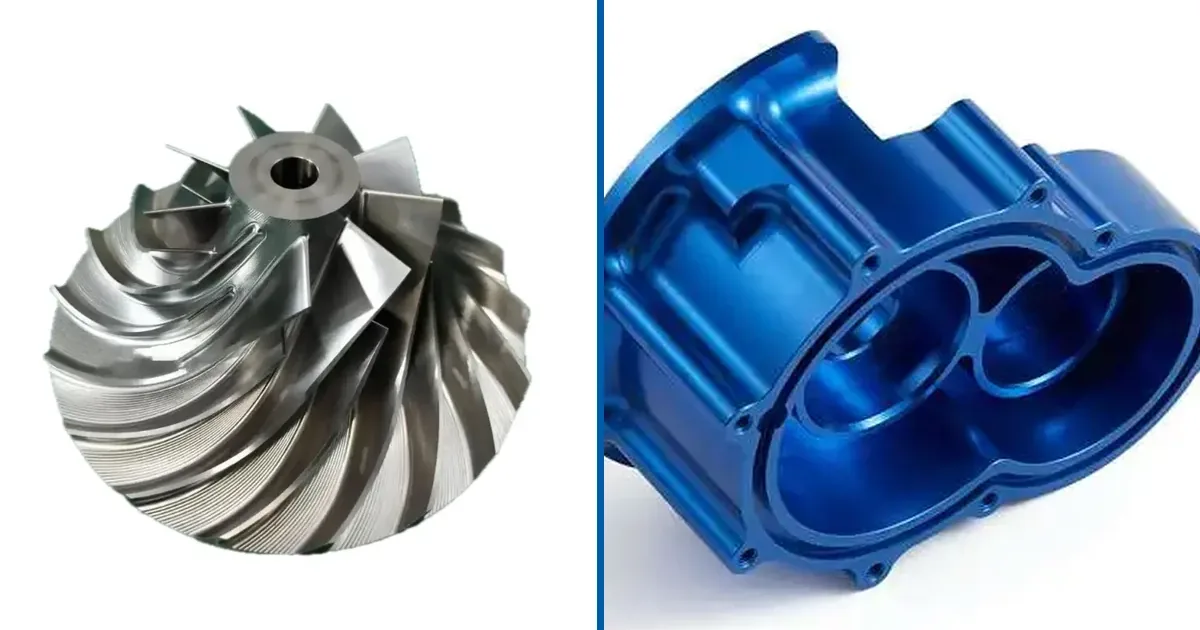
A 5-axis machine removes setups. That is the entire economic argument — and it is quantifiable
Setup costs have fallen faster than most buyers assume, but the break-even point depends almost entirely on how many setups your part saves. We break down the arithmetic using real quote data from our own floor.
The Argument Buyers Hear
The default assumption is that 5-axis is an upgrade you pay for. Ask for a 5-axis quote against a 3-axis baseline and the number comes back noticeably higher. If you accept it without asking why, you have probably paid a premium for a setup you did not need to eliminate.
But the actual economics are not a premium at all. A 5-axis machine does not cost more per part in any meaningful sense. It costs more per setup, and a setup is a fixed cost. The moment you amortise that fixed cost across enough parts — or eliminate enough setups — the multi-axis route becomes the cheaper one. The question is never "is 5-axis expensive". The question is: how many setups does this part need, and how many parts will you take?
What a Setup Actually Costs
Every flip on a 3-axis job means: unclamp, clean, re-clamp, re-establish the datum, re-zero. Each setup adds $30–100 in labour plus tolerance stack-up, because every re-fixturing is another chance to introduce error.
That stack-up point is often the more expensive half. A part that needs three setups does not just pay for three setups in labour. It pays for three chances to lose positional relationship, and it puts a tolerance floor on what any of those setups can hold. This is the argument for 5-axis that has nothing to do with cycle time.
The Multiplier Bands, Against a 3-Axis Baseline
Here is where it gets useful. Priced against a 3-axis baseline, the multipliers we work with fall into these bands:
| Route | Price multiplier | Setup cost factor | What it actually buys |
|---|---|---|---|
| 3-axis | 1.0x (baseline) | 1.0x | One setup, one orientation |
| 3+2 on a 5-axis machine | 1.6–2.2x | 1.5x | Two orientations, indexed and locked |
| Simultaneous 5-axis | 2.0–3.5x | 2.0–3.0x | Continuous rotation, all angles cut in one pass |
Read the third column carefully. It is the only one that matters for the decision, because setup cost is fixed and per-part cost drops with quantity. At qty 100 and above, fixturing and process optimisation start to pay for the difference on their own — the machine is doing more work per hour of setup.
The Break-Even Question, Worked Through
Take a part that needs three setups on 3-axis. Each setup costs $30–100 in labour, so roughly $90–300 per part in setup labour alone, before you count the tolerance penalty of re-establishing datum three times.
Now put it on a 5-axis machine with a one-off fixture. You pay a setup cost factor of 1.5–3.0x on a single setup — call it $135–450 once — and then you have saved two setups on every subsequent part. The break-even is where the one-time fixture cost equals the accumulated setup savings:
Fixture cost ÷ savings per part = break-even quantity
Run it with the mid-range numbers and you land somewhere in the region of 3–8 parts. Below that, 3-axis with extra setups genuinely wins. Above it, 5-axis is cheaper, and the gap widens with every additional unit.
The 3+2 Case Is Not the 5-Axis Case
This is the distinction most often lost, and it is worth more than the whole premium argument. If your machining angles can be listed as fixed values — holes at a set angle, a slot on the back face — you do not need simultaneous 5-axis. You need 3+2 positioning, and you should say so on the drawing.
3+2 on a 5-axis machine runs at 1.6–2.2x against the 3-axis baseline with a setup cost factor of 1.5x. Simultaneous 5-axis runs at 2.0–3.5x with a setup cost factor of 2.0–3.0x. The accuracy difference between the two is smaller than the price difference. If you are paying the simultaneous-5-axis price for a part that only needed 3+2, you have overpaid by roughly a third for nothing.
The accuracy distinction matters in the other direction too. Simultaneous 5-axis genuinely holds position across a rotating table; 3+2 locks the two axes and works in the fixture coordinate system. For a part where the critical relationship is between two faces cut at different angles, that distinction can matter. For most parts, it does not.
How to Get a Quote You Can Compare
Whatever route you end up on, the request to your supplier is the same. Ask for:
- The number of setups, per route — ask them to quote 3-axis multi-setup and 5-axis single-setup side by side, with the setup count stated on each
- The setup cost broken out — a quote that hides setup inside a per-part price cannot be compared against anything
- Which route they intend to run — and specifically whether it is 3+2 or simultaneous, because the price gap between those two is larger than most buyers realise
- The quantity break point — most shops will adjust the route at a volume threshold. Ask where that threshold is
The Summary
The 5-axis premium is a fixed cost that you either amortise or you do not. If your part genuinely needs three or more setups on 3-axis, the multi-axis route usually pays for itself within a handful of pieces and then keeps paying. If your part can be held in one setup at all — and many can, with a drawing that specifies the features to make that reachable — then 5-axis is a cost with no offsetting benefit, and you should not pay it.
The cheapest question you can ask a supplier is the simplest one: how many setups does this part need, and which route are you pricing? If the answer is specific, you can do the arithmetic yourself in about a minute. If the answer is vague, that tells you something useful too.
Related Reading
5-Axis vs 3-Axis CNC Milling: When Does It Pay Off?
The full decision framework: setup economics, tolerance capability, and the drawing practices that make each route viable.
How to Reduce CNC Machining Costs Without Changing the Design
Where cost actually sits in a machined part quote, and which design changes move the number.